Hyperbaric Oxygen Therapy (HBOT)
Oxygen-Driven Recovery. Tissue Repair. Regenerative Potential.
At StemXgene, we believe that combining regenerative treatments such as Stem Cells and PRP with Hyperbaric Oxygen Therapy (HBOT) may support and enhance the body’s natural healing processes, helping create a more favorable environment for the repair of injured tissue.
Give your body the oxygen it needs to repair, recover, and function at its best.
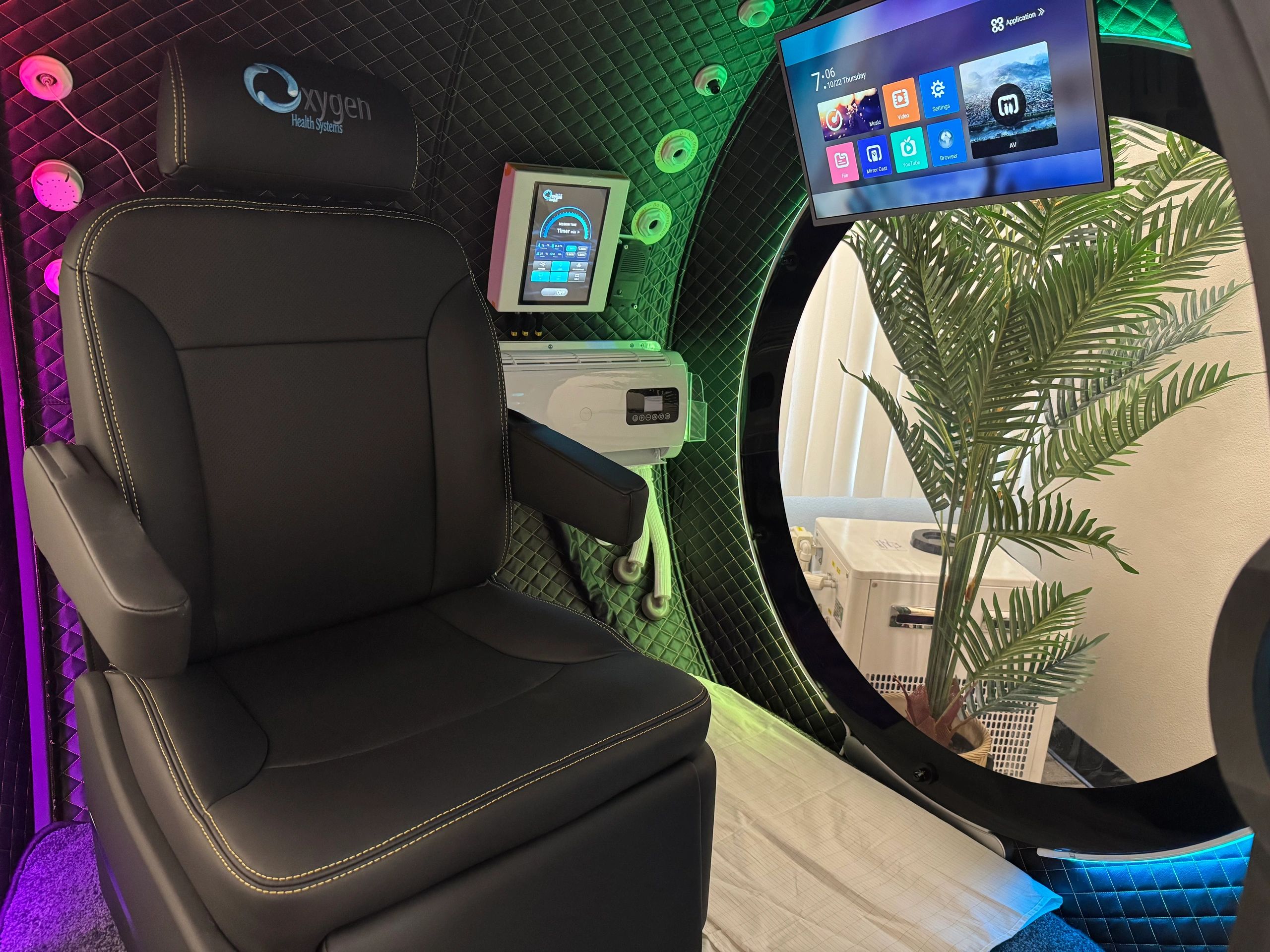
Hyperbaric Oxygen Therapy (HBOT) uses increased atmospheric pressure while breathing high-concentration oxygen to dramatically increase the amount of oxygen available to the body's tissues.
Oxygen is fundamental to cellular energy production, collagen formation, blood-vessel development, tissue repair, and recovery.
By increasing oxygen availability, HBOT may help create an environment that supports the body's natural healing and regenerative processes.

Why Oxygen Matters for Regeneration
Many tissues in the body have relatively low oxygen levels, particularly tissues with limited blood supply such as:
- Cartilage
- Tendons
- Ligaments
- Certain areas of bone
- Injured and inflamed tissues
- Ischemic or poorly perfused tissue
When tissue is injured, its metabolic demand increases while its oxygen supply may decrease.
This creates a challenging environment for healing.
HBOT temporarily increases tissue oxygen tension and oxygen availability, potentially supporting cellular processes involved in repair and recovery.
HBOT has been investigated for its effects on angiogenesis, collagen production, inflammation, vascular remodeling, and tissue repair.
HBOT and Cartilage
Cartilage is one of the body's most difficult tissues to heal.
Articular cartilage has a limited blood supply and relies heavily on diffusion for oxygen and nutrients. Once damaged, its ability to repair itself can be limited.
HBOT is being investigated as a potential way to improve the biological environment surrounding damaged cartilage.
Potential mechanisms include:
- Increasing oxygen availability to hypoxic tissues
- Supporting cellular metabolism
- Promoting tissue repair signaling
- Supporting vascular remodeling around injured tissue
- Modulating inflammatory pathways
- Supporting extracellular-matrix remodeling
- Creating conditions that may complement regenerative treatments
Preclinical research has reported encouraging signals for early cartilage repair.
HBOT and Muscle Recovery
Muscle tissue requires substantial oxygen and energy during both exercise and recovery.
HBOT is being studied for its potential effects on:
- Muscle tissue oxygenation
- Cellular energy metabolism
- Mitochondrial function
- Inflammatory signaling
- Oxidative stress
- Vascular remodeling
- Tissue recovery following injury
Experimental research suggests that HBOT may influence pathways involved in muscle regeneration and vascular remodeling. However, clinical studies have produced mixed results, particularly for routine exercise-related muscle soreness.
For this reason, HBOT should be viewed as a potential recovery and tissue-support therapy, rather than a guaranteed method of accelerating muscle recovery.
Exploring the Biology of Longevity
Aging is associated with progressive changes in cellular function, vascular health, mitochondrial performance, inflammation, and the accumulation of senescent cells.
HBOT has attracted significant interest in longevity research because repeated hyperoxic exposures may trigger cellular responses that differ from simply breathing oxygen continuously.
Researchers are investigating whether controlled HBOT exposure can influence biological pathways associated with aging, including:
- Cellular senescence
- Telomere biology
- Inflammation
- Vascular function
- Stem/progenitor-cell activity
- Tissue regeneration
- Mitochondrial function
Telomeres & Cellular Aging
Telomeres are protective structures at the ends of chromosomes. They generally become shorter as cells divide and age.
One prospective human study reported increases in telomere length in several immune-cell populations following a course of HBOT, along with reductions in markers of cellular senescence.
These findings are scientifically intriguing—but they do not establish that HBOT extends human lifespan.
Instead, they suggest that HBOT may influence certain biological markers associated with aging and cellular senescence and warrant further research.
HBOT, Cellular Energy & Mitochondria
Mitochondria use oxygen to produce ATP, the primary energy currency of cells.
Repairing damaged tissue requires substantial cellular energy.
By increasing oxygen availability, HBOT may support oxidative metabolism and mitochondrial function.
This is particularly relevant to tissues undergoing:
- Injury
- Repair
- Increased metabolic demand
- Reduced oxygen availability
- Age-related decline in cellular function
Improving the cellular environment may help support the body's natural ability to perform repair and maintenance.
HBOT and Inflammation
Inflammation is an essential component of healing—but persistent or excessive inflammation can interfere with tissue recovery.
HBOT has been investigated for its ability to influence inflammatory and oxidative-stress pathways.
Potential effects include:
- Modulation of inflammatory signaling
- Reduction of excessive tissue inflammation
- Support for tissue repair
- Improved oxygen balance in hypoxic tissue
- Support for vascular remodeling
The objective is not to eliminate inflammation—the body needs inflammation to initiate healing—but rather to support a more favorable environment for the transition from injury toward repair.